
Have you ever sat in church and heard a word you didn’t understand? Maybe, it was a church word you should’ve not but don’t really know? Don’t worry. This post lives up to its name- Christian terminology for beginners. In this post, we will list and discuss the top 10 church words.
What is Christian terminology?
Simply, Christian terminology refers to words or phrases Christians use to describe concepts found within the Bible, even though these Christian terms aren’t found in the Bible themselves. Moreover, these church words can also be called theological or doctrinal terminology. Often, they describe theological ideas or doctrinal teachings that are found in the Bible.
Why Do We Use Church Words?
We use Christian terminology for several reasons that include:
- Common vocabulary to describe a shared experience
- Summarizing scattered biblical references
- Aid in defending orthodox beliefs
- Expressing a worldview
- The Bible doesn’t forbid it
As you can see, there are many reasons why Christians use such terms. Basically, they allow us to put a handle on concepts we find in the Bible. Then, we can organize them, discuss them, and teach them to others as part of the discipleship process. Also, Chrisitan terminology helps believers recognize false teachings, easier.
Now that we’ve defined what Christian terminology is, it’s time to list the top 10 Christian words not found in the Bible.
1. The Bible
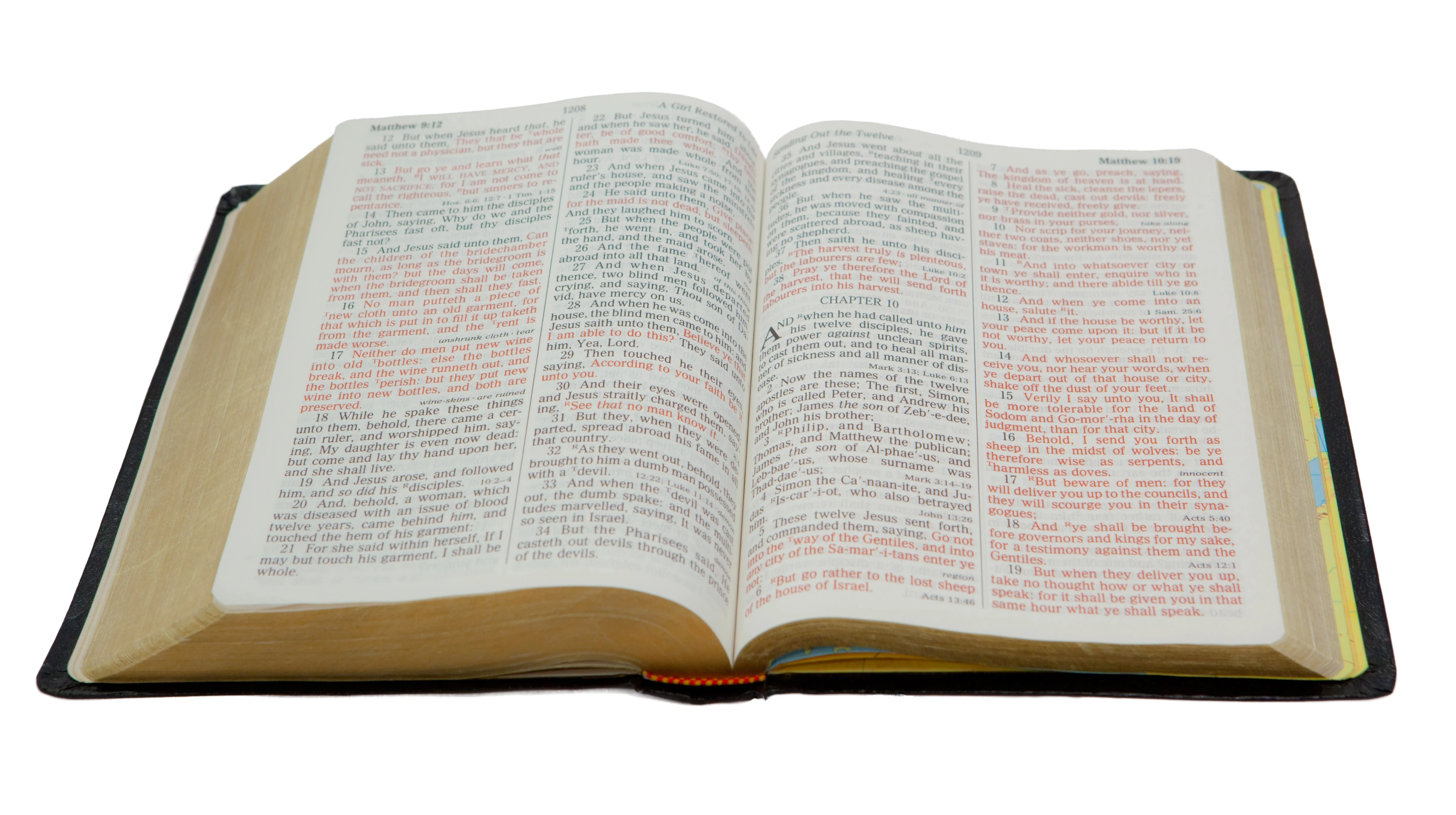
That’s right. We start the list with the word “Bible” itself. It’s nowhere found in, well, itself.
Now, the Word of God is referenced often in the bible. For example, Hebrews 4:12 states, “For the word of God is alive and active. Sharper than any double-edged sword, it penetrates even to dividing soul and spirit, joints and marrow; it judges the thoughts and attitudes of the heart.”
Also, Scripture is referred to. For instance, 2 Timothy 3:16 declares, “All Scripture is God-breathed and is useful for teaching, rebuking, correcting and training in righteousness.”
Where the Phrase The Bible Comes From
As you can see, the Bible talks about God’s Word, yet it never uses the word “Bible”. In fact, the Scriptures weren’t called the Bible until around 150 AD. Even then, it wasn’t referenced as “The Book”, which is what “Bible” means. Instead, Clement referred to the Word of God as “The Books”, which would be biblia in Greek. Eventually, biblia gets translated to Bible.
Therefore, Christians use the term the Bible to refer to the inspired Word of God contained in the 66 books of the Old and New Testaments. Again, it’s a phrase not found in the Bible used to describe a concept found in the Bible, which is the holy Scriptures of Christianity.
2. The Trinity
Ok. It’s time to bring out the big guns. I say big guns because we’re talking about God Himself, and His existence as three in one. To describe that doctrine, we turn to the Christian terminology of the Trinity.
Now, the Trinity remains probably one of the hardest Christian doctrines to explain. With that being said, here’s my feeble attempt to describe the very nature of God.
The Doctrine of the Trinity
To begin, nowhere in Scripture is there one specific verse that lays out the doctrine of the Trinity. Instead, God chose to reveal Himself to us a little at a time. Once you piece the puzzle together, you get the whole picture: One God in Three Persons.
Altogether, the Father, the Son, and the Holy Spirit are all God with there only being one God. At the same time, each member of the Godhead are not part of God. They are each fully God, but are still united as One.
No, the Christian term Trinity doesn’t appear in the bible, but you can see the Trinity at work in the Bible. For example, each member of the Trinity is set apart during Jesus’ baptism in John 3:16, 17. When Jesus, the Son, comes up out of the water, the Holy Spirit descends upon him like a dove. Then, a voice from heaven, being the Father, declares Jesus to be the Father’s “beloved son, in whom I am well pleased.”

3. Original Sin
As for original sin, this phrase of Christian terminology refers to the belief that we are all born with a sinful nature (see Romans 5:12-19 and Ephesians 2:3). We inherit this sinful nature from Adam and Eve as a result of their disobedience to God. In effect, this sinful nature puts us in opposition to God and drives us to sin.
Original Sin Explains
Original sin explains why:
- I want to do things I know I shouldn’t do
- Why suffering exists
- Why we need reconciliation with God
Whatever our view of original sin, whether it’s inherited guilt or the inherited drive to sin, the outcome remains the same. Original sin broke man’s connection with God. That relationship needed to be restored, so God the Father sent His Son Jesus to pay the price for that reconciliation.
4. Immutability
When Christians discuss God’s nature, immutability remains one of the terms often discussed.
Simply, immutability means that God does not change (Hebrews 13:8). Everything about God remains constant through time: His nature, His actions, and His promises(James 2:17).
If God is immutable, then:
- His moral standard doesn’t change
- His plans don’t change
- He remains reliable (Malachi 3:6)
- His love never waivers
What does this mean for you? God moved in the past, and He will move in your situation. He loved you when He created you, and He still loves you today.
People change their minds. God doesn’t. You can trust Him.
5. Omniscience
For this one, the meaning is all in the doctrinal term. Omniscience literally means “all-knowing”. Not only does God know everything, He knows everything perfectly.
God’s knowledge includes:
- everything past, present, and future at the same time
- every thought and intent of your heart (Psalms 139:1-6)
- outcomes of your decisions(1 John 3:20)
That’s right. God ultimately knows who chooses Him and who rejects Him. Even with that knowledge, He lets you choose.
Ultimately, His knowledge surpasses ours(Romans 11:33-34). We don’t pray to inform Him of a situation. We pray to ask for His intervention into a situation. More than that, we pray to establish a relationship with Him in the midst of that situation.
Incidentally, God may choose not to share what He knows about a matter with you. Faith requires that we trust that He knows, and that is enough.
6. Omnipotent
If omniscience means God is all-knowing, then omnipotent means God is all-powerful. No limit exists to God’s power. He will accomplish what He wills because He has the power to do so.
Think about it. God created the universe from nothing (Genesis 1). He simply spoke it into existence. Moreover, God sustains that creation by that same “word of His power” (Hebrews 1:3).
Since He creates and sustains the universe, He has authority over creation. Therefore, He acts within His creation for the good of His creation. In other words, God has the power to perform miracles on your behalf(Psalms 77:14).
7. Omnipresence
Again, since both omniscience and omnipotence both start with “omni”, which obviously means all, then omnipresence must mean “all-present”. Well, not exactly. We should probably flip the word order around. Yet, “present all” doesn’t really make sense.
Therefore, it makes more sense to say omnipresence means God is everywhere at all times. In other words, God can not be limited by space and time. He exists outside it.
For you, this means:
- God meets you were you are at (Acts 17:27-28)
- He is always there (Psalms 139:7-10)
- His help is always available (Psalms 46:1)
Overall, this means that God remains near to us, which is referred to as His immanence.
8. Rapture
For what the rapture means, we turn to the end times. In His Word, God has detailed for us what will happen at the end of days. Before God brings judgement on a disobedient mankind, He will remove His followers from the Earth.
According to the Bible, they will be taken to heaven so they will not have to experience God’s wrath. Believers will meet him in the air and be taken to heaven (1 Thessalonians 4:16-17). The Bible speaks of believers being “caught up”.
The Greek word for “caught up” is harpazo. In Latin, it’s translated rapturo, which translates to the English word “rapture“.
9. Incarnation
As for the Incarnation, this refers to God the Son becoming a man through the birth of Jesus Christ. Literally, Jesus becomes both fully God and fully man. Therefore, Jesus bears two natures.
As a doctrine, the Incarnation entails one of the most essential truths of Christianity. For Jesus’s sacrifice on the cross to fully atone, or cover, our sins, He had to a perfect man.
This could only happen if sinless God became a man who was tempted as we all are but did not sin.
This means:
- Jesus experienced everything we experienced as humans
- God entered creation personally
- God revealed Himself to us through Jesus
This is what we celebrate at Christmas.

10. Discipleship
First, let me say that while discipleship isn’t a word found in the Bible, disciple is. Jesus referred to His followers as His disciples (John 8:31-32 and John 13″34-35). Therefore, discipleship relates to the process of being a follower of Jesus.
And, discipleship is a process. As a process, discipleship requires more than a choice. In fact, discipleship requires a series of choices you make daily (Mark 8:34). These choices make up your decision to “take up your cross” and follow Jesus.
Discipleship requires:
- Learning- the teachings of Jesus
- Transforming- becoming like Jesus
- Community- fellowship with the Body of Christ, the Church (other disciples)
- Service- helping others become disciples and grow in their discipleship
Why Understanding Christian Terminology Matters
Yes, from an outsider’s perspective, Christianity can seem like a “Members Only” club. We have church words that it seems like only the initiated can understand. Actually, this can’t be further from the truth.
No, we don’t keep these doctrinal or theological terms a secret. In contrast, we use these words so that we can have a common vocabulary to teach people what we believe.
Consequently, these words help us talk about God easier. This lends itself to learning about God more. Eventually, this helps us to know God more.
Final Thoughts on Christian Terminology for Beginners
And, that’s what the Christian life is about. We want to know God more. Having a shared Christian terminology helps us understand Him better so we can know Him more.
Church words aren’t meant to keep people out, nor are they meant to cause division. They are meant to draw us together through a shared vocabulary. They don’t teach false doctrine. Christians use Christian terminology to discuss doctrines found within the Bible.
I hope this post has helped you understand the top Christian terms we use in church vocabulary. Ultimately, I hope that I helped you grow closer to God. That’s the mission of Embracing the Cross.
Please leave a comment below. Also, if you would like prayer or to discuss this more, please email me at chrism@embracingthecross.com.


